
Large art: The glue that binds us together as a people
When we think of early men and women painting the first cave drawings, it’s easy for us to imagine them as possessing the minds of children finger-painting on the rock walls of their dwellings. But these cave illustrations, while primitive in our eyes, served a critical role for the first humans—they enabled them to maintain a cultural cohesion throughout the span of generations without the need for literacy. Through these drawings they could pass down cultural lessons, stories and traditions in pictorial form and in so doing, bind descendants to ancestors.
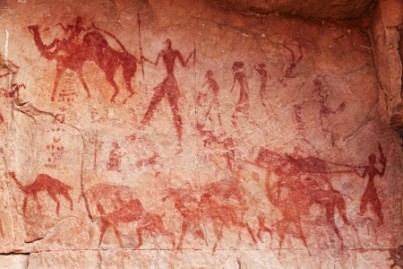 If you think we have evolved past the need for such seemingly uncivilized methods of communication, think again. Large art continues to play an important part in today’s society. But in order to see the modern equivalent of these wall paintings of old, you must think beyond the scribbles of cavemen and the hieroglyphics of ancient Egypt.
The mural you painted in your daughter’s bedroom of her favorite Disney characters, that controversial billboard you see on your way to work, the graffiti art on the building downtown, the religious painting in a great cathedral–What do all these have in common? They all act as cultural glue that brings us together as people.
While we may trivialize it as only an advertisement, or a sign or a fun illustration to decorate our child’s room, large art holds a greater meaning and purpose. Like early cave paintings, it permits us to live beyond the restraints of time that mortality places on us by leaving behind pieces of cultural identity for our descendants.
So as you consider designing a sign, a mural, or a billboard, try to imagine the excitement of future generations as they dig it up out of the earth and put it on display in a museum as a relic of a bygone era—a window into the culture of times past. Because where you see a practical piece of art for your home or business, your descendants will see a piece of their historical identity.